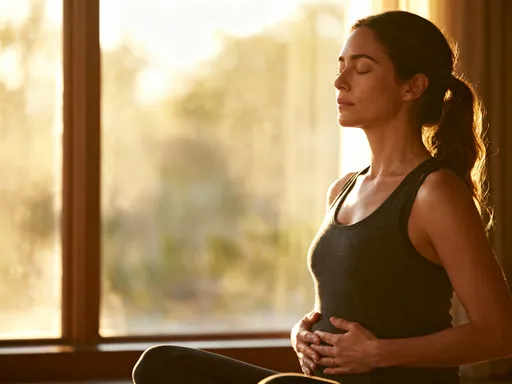
Breathe Like You Mean It: How I Finally Calmed My Mind Without Pills
Ever felt your thoughts racing like a runaway train? I did—until I discovered how simple breath work could actually rewire my stress response. No hype, no magic, just science-backed, real-deal mental reset. This isn’t about fixing yourself; it’s about finally giving your nervous system the off-switch it’s been begging for. And guess what? You’ve already got everything you need. Breathing is something we do without thinking, yet when we begin to pay attention, it becomes one of the most powerful tools for emotional balance and mental clarity. For women juggling family, work, and personal well-being, this quiet practice offers a refuge that fits into even the busiest days. The beauty lies in its simplicity: no special equipment, no expensive subscriptions, just you and your breath.
The Hidden Power of Something We Do 20,000 Times a Day
Breathing is so automatic that most people never give it a second thought—until they’re gasping for air or struggling with anxiety. Yet every day, the average person takes about 20,000 breaths, each one either reinforcing a state of tension or gently guiding the body toward calm. What makes breath unique among bodily functions is that it operates both automatically and consciously. While your heart beats and your digestion runs on autopilot, only your breath can be directly influenced by your awareness. This dual nature makes it a bridge between the mind and body, a rare point of access to the autonomic nervous system.
The autonomic nervous system controls involuntary functions like heart rate, blood pressure, and digestion, and it has two main branches: the sympathetic and the parasympathetic. The sympathetic nervous system activates the “fight-or-flight” response—useful in true emergencies but often overstimulated in modern life. The parasympathetic system, sometimes called the “rest-and-digest” mode, slows the heart, relaxes muscles, and supports recovery. When stress becomes chronic, the body gets stuck in sympathetic dominance, leading to fatigue, irritability, and difficulty concentrating. Breath work offers a direct way to shift from one state to the other.
Consider a common scenario: you wake up early, already thinking about the day’s to-do list. Your breath is shallow, high in the chest, almost imperceptible. Without realizing it, your body is already preparing for battle. This kind of unconscious breathing pattern sends signals to the brain that danger is present, even when there isn’t any. Over time, these signals accumulate, reinforcing a baseline of low-grade anxiety. But when you pause and take a slow, deep breath from the belly, you send a different message: I am safe. I can relax. This simple act can begin to reset the nervous system, not by suppressing stress, but by offering the body a chance to recalibrate.
Why Your Brain Needs This Kind of Reset
Chronic stress doesn’t just make you feel tired—it changes the way your brain functions. At the heart of this response is the amygdala, a small, almond-shaped region that acts as the brain’s alarm system. When it detects threat, it triggers a cascade of hormones, including cortisol and adrenaline, preparing the body for action. In prehistoric times, this system saved lives. Today, it often misfires, reacting to emails, traffic, or family conflicts as if they were life-threatening. The problem is that when the amygdala is constantly activated, it begins to overpower the prefrontal cortex—the part of the brain responsible for rational thinking, decision-making, and emotional regulation.
Over time, this imbalance can lead to what neuroscientists call “cognitive overload,” where even small decisions feel overwhelming. You might find yourself snapping at your children, forgetting appointments, or lying awake at night with racing thoughts. These aren’t signs of personal failure—they’re symptoms of a nervous system that’s been running on high alert for too long. The good news is that breath work can help restore balance by activating the vagus nerve, the longest cranial nerve in the body and a key component of the parasympathetic system.
When you practice slow, rhythmic breathing, especially with a longer exhale, you stimulate the vagus nerve, which in turn signals the brain to reduce heart rate and lower blood pressure. This is known as the “vagal brake,” a natural mechanism that helps calm the body. Studies have shown that regular breath training increases heart rate variability (HRV), a marker of resilience and adaptability in the nervous system. Higher HRV is linked to better emotional regulation, improved focus, and greater overall well-being. In essence, breath work doesn’t eliminate stress—it changes your relationship to it, helping you respond with clarity instead of reactivity.
My First Try: What Actually Happened (Spoiler: It Was Weird)
The first time I tried intentional breath work, I didn’t expect much. I sat on the edge of my bed, set a timer for five minutes, and followed a simple instruction: inhale for four counts, hold for four, exhale for six. Almost immediately, I felt awkward. My breath didn’t feel natural. My mind wandered to the laundry downstairs, the grocery list, the meeting I had later. I wondered if I was doing it “right.” After two minutes, I felt slightly dizzy and worried I was hyperventilating. By the end, I wasn’t sure anything had changed—except maybe a faint sense of frustration.
But then, as I stood up, I noticed something subtle: my shoulders weren’t hunched near my ears. The tightness in my chest had eased, just a little. My internal monologue, usually loud and critical, had quieted. I hadn’t achieved enlightenment, but I had created a tiny pocket of stillness in an otherwise hectic morning. That small shift was enough to make me try again the next day. Over time, the dizziness faded, the self-doubt lessened, and the moments of calm grew longer.
This experience is common among beginners. Many expect immediate transformation—peace, clarity, a completely clear mind. But breath work isn’t about perfection. It’s about presence. You don’t need to stop thinking or achieve a meditative state to benefit. The practice is simply about noticing: noticing the cool air entering your nostrils, the rise and fall of your abdomen, the slight pause between breaths. Each time you bring your attention back, you’re strengthening your mental muscle, just as lifting weights strengthens your arms. And like any new skill, it takes time, patience, and repetition. The real progress isn’t always dramatic—it’s in the quiet moments when you realize you’re breathing more deeply without even trying.
The 4-7-8 Trick: Simple But Not Just Hype
One of the most accessible and effective breath techniques is the 4-7-8 method, developed by Dr. Andrew Weil as a tool for relaxation and sleep support. The pattern is simple: inhale quietly through the nose for a count of four, hold the breath for a count of seven, then exhale slowly and completely through the mouth for a count of eight. This cycle is repeated for four rounds, ideally twice a day—once in the morning and once before bed. While it may sound overly structured, the rhythm is designed to maximize the calming effect on the nervous system.
The key lies in the extended exhale. When you exhale longer than you inhale, you activate the vagus nerve more strongly, triggering the parasympathetic response. The seven-second hold also allows carbon dioxide to build up slightly in the bloodstream, which helps relax blood vessels and further signals the body to slow down. Many people report feeling drowsy after just one round—proof that the technique is working. It’s particularly helpful for those who struggle with falling asleep or wake up in the middle of the night with racing thoughts.
To practice effectively, sit upright with your back supported, place the tip of your tongue against the ridge behind your upper front teeth, and use a quiet, consistent count. A phone timer with a gentle chime can help maintain the rhythm without distraction. It’s important not to force the breath—if eight seconds feels too long, start with six and gradually extend. Common mistakes include holding the breath too tightly, breathing too rapidly, or skipping the hold altogether. The goal isn’t performance but consistency. Even two or three minutes a day can make a difference. Over time, this practice can become a reliable anchor, a way to reset your nervous system before bedtime or during moments of acute stress.
Box Breathing: Navy SEALs Aren’t Wrong (But You Don’t Need to Be One)
If the 4-7-8 method is about deep relaxation, box breathing is about mental clarity and emotional stability. Also known as square breathing, this technique follows a four-part pattern: inhale for four counts, hold for four, exhale for four, and pause for four before beginning again. The equal length of each phase creates a rhythmic, predictable pattern that helps steady the mind. Originally used by Navy SEALs to maintain focus under extreme pressure, it’s now widely adopted by professionals in high-stress fields—from surgeons to air traffic controllers.
What makes box breathing powerful is its ability to regulate both attention and emotion. When you’re faced with a difficult conversation, a tight deadline, or an unexpected challenge, your breath often becomes fast and shallow. Box breathing interrupts that pattern, restoring balance before your stress response takes over. The pause after the exhale is especially important—it allows the body to reset and the mind to gather itself. Unlike more passive relaxation techniques, box breathing engages the brain in a structured task, which helps pull attention away from anxious thoughts.
For women managing multiple roles, this technique can be a game-changer. Imagine using it before a parent-teacher conference, during a tense family discussion, or even while waiting in the school pickup line. It doesn’t require silence or privacy—just a few conscious breaths. Some people find it helpful to visualize drawing a square in the air with their finger, tracing one side with each phase of the breath. The practice builds resilience not by eliminating stress, but by increasing your capacity to stay composed within it. You don’t need to be in a crisis to benefit; daily use can enhance focus, reduce reactivity, and support emotional intelligence over time.
Weaving Breath Into Real Life (Not Just Cushions and Chants)
One of the biggest misconceptions about breath work is that it requires special conditions: a quiet room, candles, meditation cushions, or long stretches of free time. But the truth is, the most effective practice is the one that fits into your real life. You don’t need to set aside an hour to benefit. In fact, integrating short, intentional breaths throughout the day can be more powerful than a single long session. Think of it as mental hygiene—like brushing your teeth, but for your nervous system.
Start with micro-practices. Take one slow, deep breath at every red light. Before opening your email, pause and take three full cycles of breath—inhale, exhale, repeat. Use daily routines as cues: every time you open a door, wash your hands, or pour a cup of tea, let it be a reminder to check in with your breath. These small moments add up, training your body to return to calm more easily. Over time, you may find yourself doing it automatically—without even thinking.
The goal isn’t to escape stress but to change your relationship with it. When you’re stuck in traffic, instead of tightening your grip on the wheel, you might notice your breath and soften your jaw. When the kids are吵闹, instead of raising your voice, you might pause and take a slow exhale before responding. These aren’t grand gestures—they’re quiet acts of self-care that build resilience over time. And unlike apps or supplements, breath work is always available, free, and completely within your control. It’s not about adding one more thing to your to-do list; it’s about transforming the way you move through your existing day.
When to Seek More—And Why Breath Isn’t a Cure-All
While breath work is a powerful tool, it’s not a substitute for professional care. For women experiencing clinical anxiety, depression, or trauma, breath techniques can be a helpful complement to therapy and, when appropriate, medication. But they should not be relied upon as the sole treatment. If you find that your symptoms persist despite regular practice—if you’re still struggling with sleep, concentration, or emotional regulation—it’s important to seek support from a qualified healthcare provider.
Some people may also find that certain breath techniques trigger discomfort, especially if they have a history of panic attacks or respiratory conditions. In such cases, gentler methods—like diaphragmatic breathing or simply observing the natural breath—may be more suitable. The key is to approach the practice with self-compassion, not pressure. You’re not trying to “fix” yourself; you’re learning to listen to your body and respond with care.
That said, breath work can play a vital role in increasing self-awareness. As you tune in to your breathing patterns, you may begin to notice how your body responds to different emotions—how anger makes your breath shallow, how sadness slows it down. This awareness can help you recognize early signs of stress and take action before it escalates. It can also make it easier to identify when you need more than breath work alone. In this way, the practice becomes not just a tool for calm, but a guide to deeper self-understanding.
Your Breath, Your Inner Anchor
At its core, breath work is not about achieving a particular state—it’s about returning to yourself. In a world that constantly pulls your attention outward, your breath is a quiet, steady presence you can always come back to. It doesn’t require apps, subscriptions, or special training. It’s not tied to trends or ideologies. It’s simply there, moment by moment, offering a chance to pause, to reset, to be present.
For women navigating the complexities of modern life—balancing careers, families, personal goals, and self-care—this practice offers something invaluable: a sense of agency. You may not be able to control everything that happens, but you can control your breath. And in that control lies a profound truth: calm is not something you find outside yourself. It’s something you cultivate from within.
With regular practice, breathing becomes more than a biological function. It becomes a promise—a quiet vow to show up for yourself, to honor your limits, to respond with intention rather than reaction. You won’t always get it right. Some days, you’ll forget. Some days, stress will win. But each time you return to your breath, you reaffirm a simple, powerful message: I am here. I am steady. I am in control of my calm. And that, more than any technique, is the heart of true well-being.