How I Found My Balance — And Why It’s More Than Just Standing on One Leg
We often think of balance as physical—staying upright, not wobbling. But true balance runs deeper. For months, I felt off: tired, distracted, emotionally shaky. My doctor didn’t just suggest strength training—she asked about my sleep, stress, and mindset. That’s when I realized: balance is whole-body, blending physical stability with mental calm. It’s not about perfection—it’s about alignment. This is what I learned rebuilding mine, from the ground up.
The Moment I Realized I Was Out of Balance
It started with small things. I’d reach for a glass and knock it over. I’d stand up too fast and feel a wave of dizziness. At first, I blamed fatigue or aging. But then the emotional shifts began. I snapped at my children over minor things. I felt restless in the evenings, unable to settle even after a full night’s sleep. My body seemed to be moving through fog, and my mind wasn’t much clearer.
I wasn’t falling—so I told myself I was fine. But fine wasn’t how I felt. I was functional, yes, but not fully present. I’d walk into a room and forget why I was there. Conversations felt harder to follow. The world seemed louder, brighter, more demanding. I didn’t recognize this version of myself. Then, during a routine check-up, my doctor asked a question that changed everything: “When was the last time you felt steady?” Not physically—but in general. That question cracked something open.
She didn’t jump to prescriptions. Instead, she observed how I stood, how I turned, how I responded when asked to close my eyes and touch my nose. Simple tests, but they revealed subtle deficits in coordination and focus. What I had dismissed as stress or busyness was actually a system out of sync. The dizziness, the irritability, the forgetfulness—they weren’t isolated issues. They were signals. My body and mind were struggling to stay in balance, and I hadn’t noticed until it began to show.
What “Balance” Really Means: Beyond the Physical
Most people think of balance as a physical skill—something gymnasts have or older adults lose. But balance is far more complex than just not falling. It is a continuous, dynamic process involving multiple systems working in harmony. The vestibular system in the inner ear detects motion and spatial orientation. Vision provides information about the environment. Proprioception—the body’s ability to sense where its parts are in space—relies on feedback from muscles, joints, and skin. Together, these systems allow us to move with confidence and control.
Yet, balance isn’t confined to the body. Mental balance—emotional regulation, cognitive clarity, and resilience under pressure—is equally vital. Just as a slight misalignment in the inner ear can make someone feel unsteady, chronic stress or emotional overload can disrupt mental equilibrium. The brain’s prefrontal cortex, responsible for focus and decision-making, functions best when not overwhelmed. When flooded with cortisol or anxiety, it becomes harder to think clearly, stay calm, or respond thoughtfully.
Think of balance as a three-legged stool: physical stability, mental clarity, and emotional calm. Remove one leg, and the whole structure wobbles. A person may have strong muscles but still feel off-kilter if their mind is racing. Another may appear composed but struggle with dizziness due to poor sleep or sensory overload. True balance requires integration. It’s not a static state but a constant recalibration, like adjusting sails in changing winds. Recognizing this shift—from seeing balance as purely physical to understanding it as a whole-body experience—was the first step toward reclaiming mine.
Why Modern Life Throws Us Off (And How We Don’t Notice)
We live in a world that constantly pulls us out of alignment. Long hours at desks, staring at screens, and rushing from task to task have become the norm. These habits may seem harmless, but they quietly erode both physical and mental balance. Sitting for extended periods reduces circulation, weakens core muscles, and limits sensory input—three factors essential for stability. The body adapts to stillness, but at a cost: diminished awareness of posture, movement, and spatial orientation.
Our eyes, too, are overworked. Hours spent focused on close-up screens strain the visual system, which plays a key role in balance. The brain relies on visual cues to orient itself in space. When those cues are limited or distorted—such as when staring at a flat, glowing rectangle for hours—spatial awareness can decline. This phenomenon, sometimes called “screen-induced disorientation,” may explain why some people feel slightly unsteady after prolonged digital use, even if they’re physically healthy.
Meanwhile, urban environments offer little sensory variety. Concrete walls, artificial lighting, and constant noise reduce the brain’s opportunity to engage with natural rhythms. Nature provides rich, diverse stimuli—uneven terrain, shifting light, organic sounds—that challenge and strengthen the nervous system. Without these inputs, the brain and body become less adaptable. We grow accustomed to being slightly off-balance, so we stop noticing it. The result? A slow drift from centeredness, masked by productivity and routine. We don’t realize how far we’ve tilted until we start to stumble.
The Mind-Body Link: How Stress Affects Stability
Stress is more than an emotional burden—it has tangible effects on physical control. When the body enters a state of heightened alert, whether from work pressure, family demands, or financial worry, it activates the sympathetic nervous system. Heart rate increases, muscles tense, and breathing becomes shallow. These responses are designed for survival, not sustained daily living. Over time, chronic stress disrupts the very systems needed for balance.
Cortisol, the primary stress hormone, plays a significant role. Elevated levels impair concentration, reduce coordination, and increase muscle stiffness—particularly in the neck and shoulders. This tension alters posture and restricts movement, making it harder to maintain equilibrium. Studies have shown that individuals under high stress perform worse on balance tests, even when physically fit. The mind’s load directly impacts the body’s ability to stay steady.
Consider the experience of walking through a crowded city during rush hour. The noise, movement, and urgency create a sensory overload. Even without physical exertion, the mental effort of navigating this environment can lead to fatigue and minor missteps. A person might trip on a curb not because of poor eyesight or weak legs, but because their brain is overloaded. Emotional strain—like anxiety or grief—can have similar effects. The body responds to psychological distress as if it were physical danger, tightening muscles and narrowing focus. This state may protect in emergencies, but it undermines balance in everyday life. Calming the mind isn’t indulgence—it’s a necessary step toward physical stability.
Simple Daily Moves That Build Real Balance
Rebuilding balance doesn’t require drastic changes or expensive equipment. Small, consistent actions can yield significant improvements. The key is to integrate movement into daily routines, turning ordinary moments into opportunities for training. Three simple exercises, backed by neuroscience and physical therapy research, can enhance both physical and neurological coordination.
The first is standing on one leg while brushing your teeth. This seemingly minor act challenges the vestibular system and strengthens proprioception. As the body adjusts to uneven weight distribution, the brain receives feedback from muscles and joints, improving communication between mind and body. Doing this for just one minute per side, twice a day, builds neural pathways associated with stability. Over time, it enhances confidence in movement and reduces the risk of minor stumbles.
Second is the heel-to-toe walk, also known as the tandem gait test. Walking in a straight line, placing one foot directly in front of the other, requires focus and coordination. It mimics the balance demands of narrow paths or uneven surfaces. Practicing this for a few minutes daily—along a hallway or sidewalk—sharpens spatial awareness and strengthens core muscles. It also trains the brain to process sensory input more efficiently, which supports both physical and mental clarity.
Third are slow head turns. While standing or seated, turning the head side to side at a controlled pace challenges the inner ear’s ability to track motion. This exercise improves vestibular function, which is crucial for preventing dizziness. Adding a visual target—like focusing on a spot on the wall—enhances the effect. These movements, though simple, activate the brain’s balance centers. When done mindfully, they become more than exercise—they become moments of presence, reinforcing the connection between body and mind.
Mental Reset Practices for Inner Steadiness
Just as the body needs movement to stay balanced, the mind requires regular reset points to maintain clarity and calm. Emotional turbulence, racing thoughts, and mental fatigue can be as destabilizing as physical weakness. Fortunately, there are accessible, evidence-based practices that help restore inner equilibrium without requiring special training or time-intensive routines.
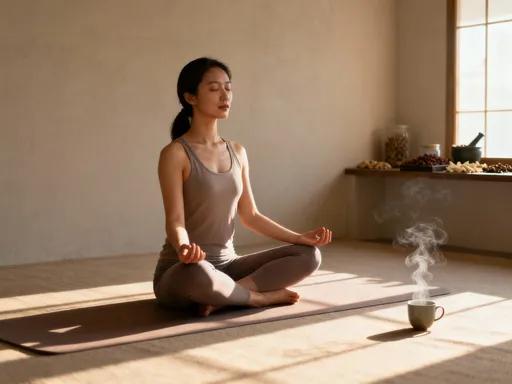
One of the most effective tools is diaphragmatic breathing—slow, deep breaths that engage the belly rather than shallow chest breathing. This type of breathing activates the parasympathetic nervous system, signaling safety to the body. Within minutes, heart rate slows, muscles relax, and mental focus improves. Practicing this for five minutes in the morning or before bed can create a foundation of calm that supports decision-making and emotional resilience throughout the day.
Another powerful method is the “5-4-3-2-1” grounding technique. It works by reconnecting the mind to the present moment through the senses. Name five things you can see, four you can touch, three you can hear, two you can smell, and one you can taste. This exercise interrupts rumination and anxiety by shifting attention to immediate, tangible experiences. It’s especially helpful during moments of overwhelm, helping the brain reset and regain a sense of control.
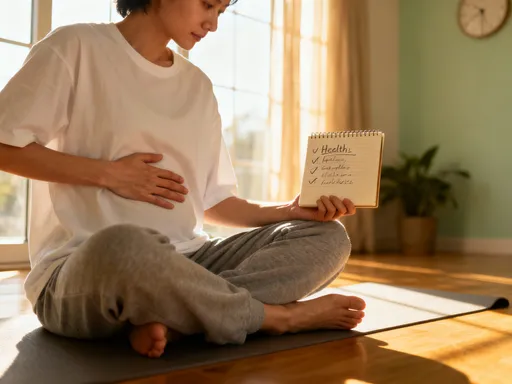
Daily check-ins are equally important. Taking a few minutes to reflect—either silently or through journaling—allows you to identify emotional triggers before they build. Simple prompts like “How do I feel right now?” or “What’s weighing on me?” foster self-awareness. Over time, this practice builds emotional regulation, much like physical exercise builds strength. These mental resets don’t eliminate stress, but they create space between stimulus and response, allowing for more balanced reactions.
Building a Balanced Life: Small Shifts, Big Results
Balanced living isn’t about achieving perfection or eliminating stress. It’s about creating a lifestyle that supports ongoing alignment—physically, mentally, and emotionally. The most effective changes are often the smallest: choosing to walk mindfully instead of rushing, pausing to breathe before responding, or stepping away from screens to look at the sky. These micro-habits, repeated over time, compound into lasting stability.
Sleep, hydration, and movement form the foundation. Quality rest allows the brain and body to recover and recalibrate. Even minor sleep deficits impair coordination and emotional regulation. Staying hydrated supports circulation and cognitive function—dehydration can mimic symptoms of fatigue and dizziness. And regular movement, not just exercise but everyday activity like stretching or walking, keeps the nervous system responsive and adaptable.
Reducing screen time, especially before bed, helps restore natural rhythms. The blue light from devices disrupts melatonin production, making it harder to fall asleep and reducing sleep quality. Replacing late-night scrolling with reading or quiet conversation supports better rest, which in turn enhances daytime clarity and balance. Similarly, spending time in nature—whether walking in a park or tending a garden—offers sensory richness that strengthens the brain’s ability to adapt and focus.
Progress isn’t linear. There will be days of fatigue, distraction, or emotional strain. But with awareness, each moment becomes an opportunity to return to center. Balance is not a destination but a practice—an ongoing act of listening, adjusting, and caring. It grows from the quiet choices we make: to stand a little taller, breathe a little deeper, and move through life with intention. Anyone can cultivate it. It begins not with grand gestures, but with a single step—on one leg, and with a calm mind.