How I Learned to Trust My Balance — A Deeper Look at Body Awareness
I never thought about my balance until I started feeling unsteady on stairs. It wasn’t dizziness — just a quiet loss of control. That moment pushed me to explore how balance truly works, not just as a physical skill, but as a window into overall health. What I found surprised me: it’s not just about aging or strength. This is a real talk about testing, tracking, and improving one key thing most of us ignore — until we stumble.
The Moment It Clicked: A Personal Wake-Up Call
It happened on a staircase in my own home — a place I’d walked up and down thousands of times. One step felt different. My foot landed slightly off-center, and instead of adjusting smoothly, my body wavered. I caught myself on the railing, heart beating a little faster, but no one saw. There was no fall, no injury, just a quiet jolt of alarm. That small incident stayed with me. It wasn’t pain or illness, but a subtle shift — a moment where my body seemed to forget how to trust itself.
This experience is more common than many realize. Balance issues rarely announce themselves with drama. They creep in through minor stumbles, hesitation on uneven ground, or needing to hold a countertop when bending over. These are not just signs of getting older — they are signals from a complex system that may be falling out of sync. Balance is not merely about not falling; it is the result of constant communication between your brain and body.
Three main systems work together to keep you steady: the vestibular system in your inner ear, which senses motion and head position; your vision, which provides spatial orientation; and proprioception — the sense of where your body parts are in space without looking. When these systems align, movement feels effortless. But when one lags — perhaps due to stiff joints, weak muscles, or reduced sensory input — the brain struggles to maintain stability, even if you don’t notice it right away.
The wake-up call for many is not a diagnosis but a moment of uncertainty. That slight wobble on the sidewalk, the extra grip needed on the handrail, the hesitation before stepping off a curb. These are not trivial. They are early warnings. Recognizing them is the first step toward taking action — not out of fear, but out of care for long-term well-being.
Why Balance Matters More Than You Think
Most people assume balance only becomes important later in life, when the risk of falling increases. But the truth is, balance plays a critical role at every stage of adulthood. Poor balance doesn’t just lead to accidents — it reflects deeper changes in how your body functions. Over time, diminished stability can limit mobility, reduce confidence in movement, and quietly chip away at independence, even for those in their 40s and 50s.
Research consistently shows that balance is closely linked to overall health. While specific statistics vary, public health organizations emphasize that falls are a leading cause of injury across age groups, not just among older adults. What’s less discussed is that many of these incidents begin with unnoticed deficits — small imbalances that go unaddressed for years. The body adapts, compensates, and eventually reaches a point where it can no longer keep up.
The good news? Balance is not a fixed trait. Unlike certain aspects of health that decline inevitably, balance can be improved at any age. It is a skill — one that can be trained, refined, and strengthened through consistent practice. The brain’s ability to adapt, known as neuroplasticity, allows for continuous improvement in coordination and stability, even after years of inactivity.
Lifestyle plays a major role in how balance develops or deteriorates. Modern habits — long hours sitting, minimal barefoot movement, and constant focus on screens — reduce the natural challenges our bodies need to stay sharp. When movement becomes predictable and limited, the systems responsible for balance grow dull. Muscles weaken, joints stiffen, and sensory feedback slows. The result is a body that functions on autopilot — until it doesn’t.
What Your Body Is Actually Testing When You Stand on One Leg
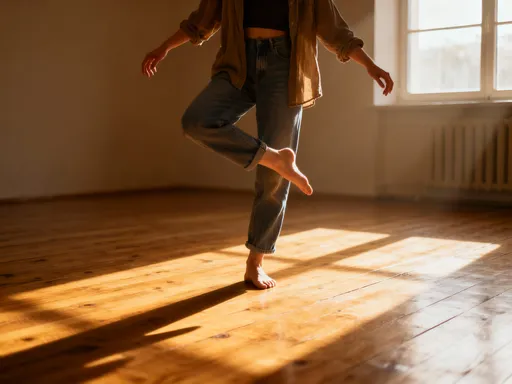
Try standing on one foot. It seems simple, but within seconds, your body is performing a quiet symphony of adjustments. Your inner ear detects the slightest tilt. Your eyes lock onto a fixed point to stabilize your sense of space. The nerves in your foot and ankle send continuous updates about pressure and surface texture. Your core engages subtly to prevent swaying. All of this happens without conscious thought — a silent conversation between body parts, orchestrated by the brain.
This act — balancing on one leg — is more than a test of strength. It reveals how well your nervous system integrates information from multiple sources. If one input is weak — say, stiff ankles limiting foot feedback, or poor core control making small corrections harder — your body must work harder to stay upright. You might still balance, but with less efficiency and more effort.
Over time, these small inefficiencies accumulate. A delayed reflex here, a slightly weaker muscle there — they don’t cause immediate problems, but they reduce your margin of safety. That’s why someone might feel fine one day and then stumble the next, not because of a sudden change, but because the system was already operating near its limit.
Common contributors to balance challenges include reduced joint mobility, especially in the ankles and hips, which limits the body’s ability to make micro-adjustments. Weakness in the core and lower limbs, particularly the muscles that stabilize the pelvis and knees, also plays a role. Even something as simple as wearing overly supportive shoes all the time can dull the sensory feedback from the feet, making the brain less responsive to changes in terrain.
The key insight is that balance is not isolated to one part of the body. It is a full-body function, dependent on the smooth interaction of movement, sensation, and brain processing. When you stand on one leg, you’re not just testing your legs — you’re testing your entire movement system.
Simple Ways to Check Your Own Balance (No Equipment Needed)
The good news is that you don’t need special tools or a doctor’s visit to start assessing your balance. Three simple, equipment-free tests can give you a realistic snapshot of your current stability. These are not meant to diagnose but to raise awareness and help you track progress over time.
First, try the timed single-leg stance. Stand near a wall or sturdy chair for safety. Lift one foot off the ground and balance on the other. Set a goal of holding the position for 20 to 30 seconds. Repeat on the other side. Most adults can manage at least 20 seconds per leg, but even holding 10 seconds is a starting point. If you wobble significantly or need to put your foot down early, it’s not a failure — it’s feedback.
Second, perform a heel-to-toe walk. Walk in a straight line, placing the heel of one foot directly in front of the toes of the other, like walking on a tightrope. Take 10 steps forward and 10 back. Do this slowly and focus on control. If you feel unsteady, veer off the line, or need to step out, it indicates room for improvement in coordination and balance.
Third, test step-up control. Use a low, stable step — about 6 inches high. Step up with one foot, bring the other up, then step down in reverse. Do this slowly, focusing on smooth movement. If you feel shaky, need to grab support, or land heavily, it suggests that your body’s ability to control motion needs attention.
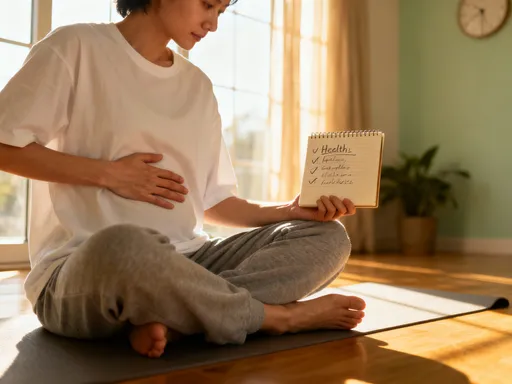
The goal is not perfection but consistency. Try these tests once a month in the same conditions — same time of day, same footwear. Track your results in a simple journal or notes app. Over time, you may notice improvements: longer holds, steadier walks, smoother step-ups. Celebrate small wins. Progress is personal, not comparative. What matters is that your body is responding, adapting, and growing stronger.
Daily Habits That Quietly Damage Your Stability
Many of the habits that undermine balance are so common they go unnoticed. Sitting for long periods, wearing flat or overly cushioned shoes, spending hours looking down at screens — these everyday choices may seem harmless, but they quietly erode the very systems that keep you steady.
Prolonged sitting is one of the most significant contributors. When you sit, your ankle, hip, and core muscles are inactive. Over time, this leads to stiffness and weakness, particularly in the stabilizing muscles that help you adjust during movement. The less you move, the less your body practices balance — and like any skill, it fades without use.
Footwear also plays a subtle but powerful role. Shoes with thick soles or high arch support may feel comfortable, but they reduce the sensory input your feet send to your brain. Walking barefoot on safe, varied surfaces — like grass, sand, or textured tiles — helps keep your foot nerves active and responsive. When you’re always cushioned, your body loses some of its natural ability to detect and react to changes in the ground.
Screen-focused posture is another silent factor. Looking down at a phone or computer shifts your center of gravity and limits your field of vision. This reduces the brain’s access to visual cues that help maintain balance. Over time, this posture can lead to stiffness in the neck and upper back, which affects how well your vestibular system functions.
Walking on flat, predictable surfaces — sidewalks, gym floors, office carpets — also limits your body’s need to adapt. In nature, every step is slightly different. On pavement, every step is the same. Without varied terrain, your joints and muscles don’t get the subtle challenges they need to stay sharp.
The solution is not to overhaul your life but to introduce small, sustainable changes. Stand up every 30 minutes. Spend a few minutes barefoot at home. Take short walks on uneven ground, like a garden path or park trail. Look up and scan your surroundings while walking. These tiny shifts reactivate underused systems and keep your balance network engaged.
Movement Practices That Actually Improve Balance — Beyond Standing on One Foot
Improving balance goes beyond isolated exercises. While standing on one leg is a useful test, real progress comes from movement practices that challenge coordination, body awareness, and controlled instability. Three proven approaches — tai chi, yoga, and functional strength training — offer lasting benefits by training the whole system, not just the muscles.
Tai chi, often described as “meditation in motion,” is especially effective for balance. Its slow, flowing movements require constant weight shifts, controlled turns, and precise foot placement. These actions enhance proprioception and improve the brain’s ability to coordinate movement. Studies have shown that regular tai chi practice can significantly reduce the risk of falls and improve confidence in movement. The key is consistency — even 10 to 15 minutes a day can make a difference.
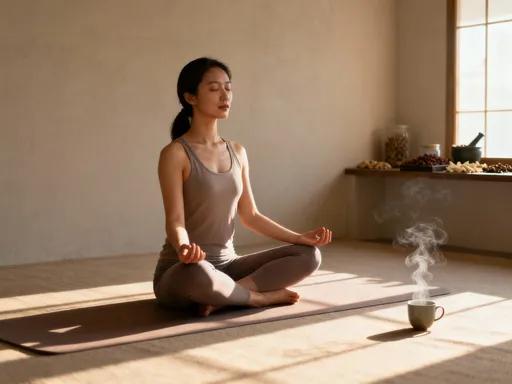
Yoga also supports balance by combining strength, flexibility, and mindfulness. Poses like Tree Pose, Warrior III, and Eagle Pose challenge stability while encouraging focus and breath control. More importantly, yoga teaches you to notice subtle shifts in alignment and correct them — a skill that translates directly to everyday movement. The emphasis on slow, deliberate motion helps build neural pathways that support better coordination over time.
Functional strength training focuses on movements that mimic real-life activities — stepping, reaching, bending, lifting. Exercises like slow lunges, step-ups, and single-leg deadlifts strengthen the muscles used in balance while improving joint control. Unlike traditional weightlifting, which often isolates muscles, functional training integrates multiple body parts, reinforcing the coordination needed for stability.
For beginners, the best approach is to start small. Try 10 minutes of tai chi in the morning, a short yoga sequence before bed, or a few functional exercises during a break. The goal is not intensity but mindfulness — paying attention to how your body moves, where you feel tension, and how you adjust. Over time, these practices retrain your nervous system to respond more quickly and accurately to changes in balance.
When to Seek Help — And Why It’s Not Just for Older Adults
There’s no shame in seeking professional support for balance concerns. Physical therapists are specially trained to assess movement patterns, identify imbalances, and design personalized exercises to improve stability. A consultation is not just for those who have fallen — it’s a preventive step, like a dental check-up for your movement system.
If you notice persistent unsteadiness, frequent near-falls, or increasing difficulty with stairs or uneven ground, it’s worth getting evaluated. A history of falls, even minor ones, is a strong indicator that your balance system needs attention. So is a feeling of dizziness or disorientation during routine activities — these may point to underlying issues that can be addressed with the right guidance.
What many don’t realize is that early intervention can prevent future problems. Balance training is not reactive — it’s proactive. Just as you might strengthen your heart with aerobic exercise, you can strengthen your stability with targeted movement. The earlier you start, the more resilient your body becomes.
Professional evaluation can uncover specific contributors — such as joint stiffness, muscle weakness, or sensory deficits — and provide tailored strategies to address them. This might include customized exercises, gait training, or recommendations for footwear and home safety. The focus is not on limitation but on empowerment — helping you move with greater confidence and control.
Conclusion
Balance isn’t just about staying upright — it’s a sign of how well your body listens to itself. It reflects the harmony between your muscles, nerves, and senses — a quiet dialogue that keeps you steady without you even noticing. When that dialogue falters, it’s not a sign of failure, but an invitation to listen more closely.
By paying attention early, testing honestly, and moving mindfully, you invest in more than stability. You’re building a body that responds, adapts, and stays resilient. Small habits — standing on one leg while brushing your teeth, walking barefoot on safe surfaces, taking a short tai chi session — add up to meaningful change.
Improvement doesn’t require drastic measures. It begins with awareness — noticing how you move, honoring the signals your body sends, and taking gentle, consistent action. Balance is not about perfection. It’s about connection. And that kind of health? It carries you forward — steadily, confidently, one step at a time.